Telekinesis Learning Library

Learn the Fundamentals of Physical AI.

Understand the architectures, mechanisms, and practical use of Physical AI models in the Telekinesis Agentic OS.

Technical tutorials

Learn one model at a time

6 of 6 deep dives

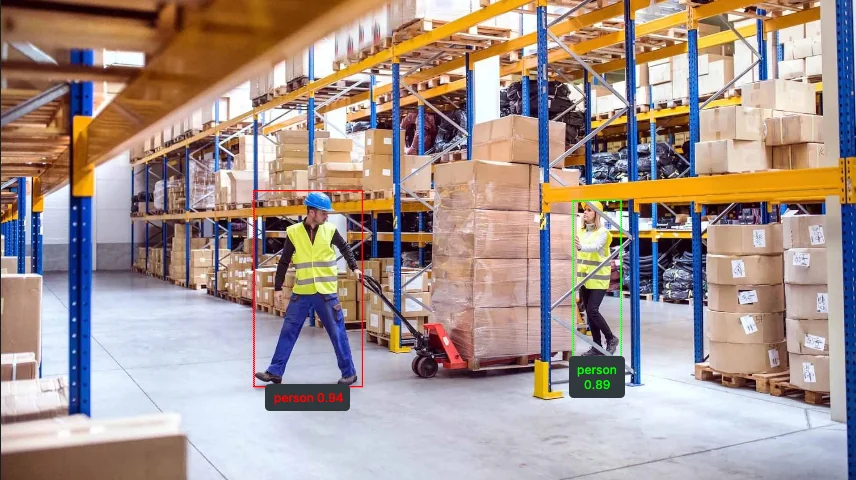
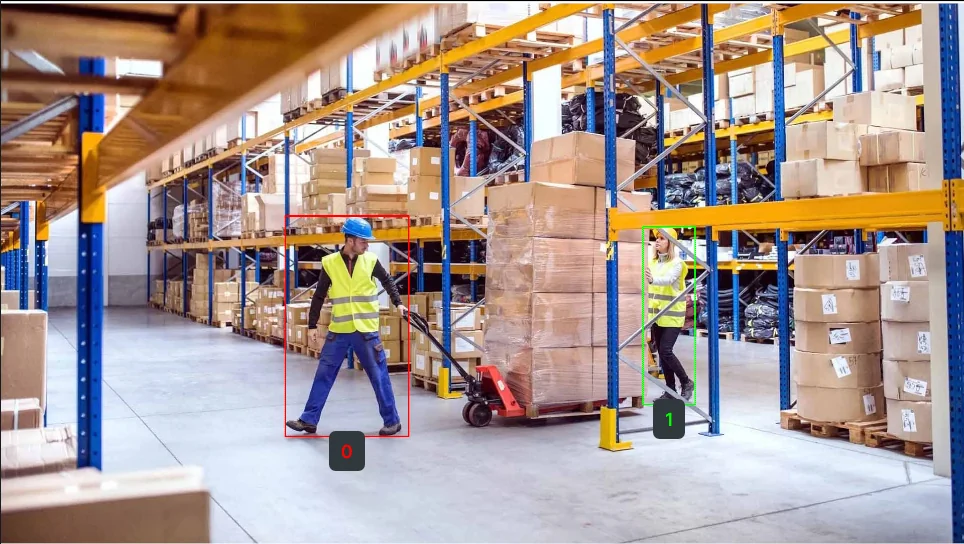
Objects localized with labeled bounding boxes by Grounding DINOIntermediate · 9 min read

What is Grounding DINO?

Learn how Grounding DINO finds objects described at inference time. Follow image and text features through fusion, query selection, and box decoding, then see where open-vocabulary detection fits in a robot pipeline.

Read tutorial →
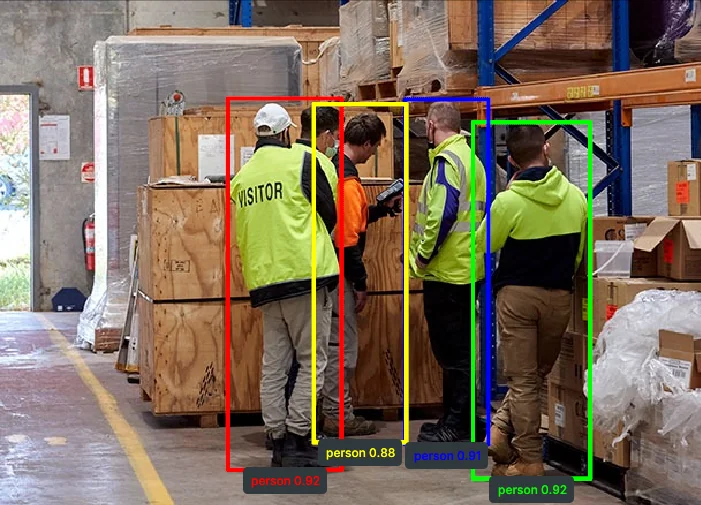
Objects detected and localized in a warehouse image using QwenIntermediate · 8 min read

What is Qwen?

See how Qwen-VL turns image patches and a prompt into language and object locations. Learn what the position-aware adapter does, why grounding is generated token by token, and when a general vision-language model is useful in robotics.

Read tutorial →
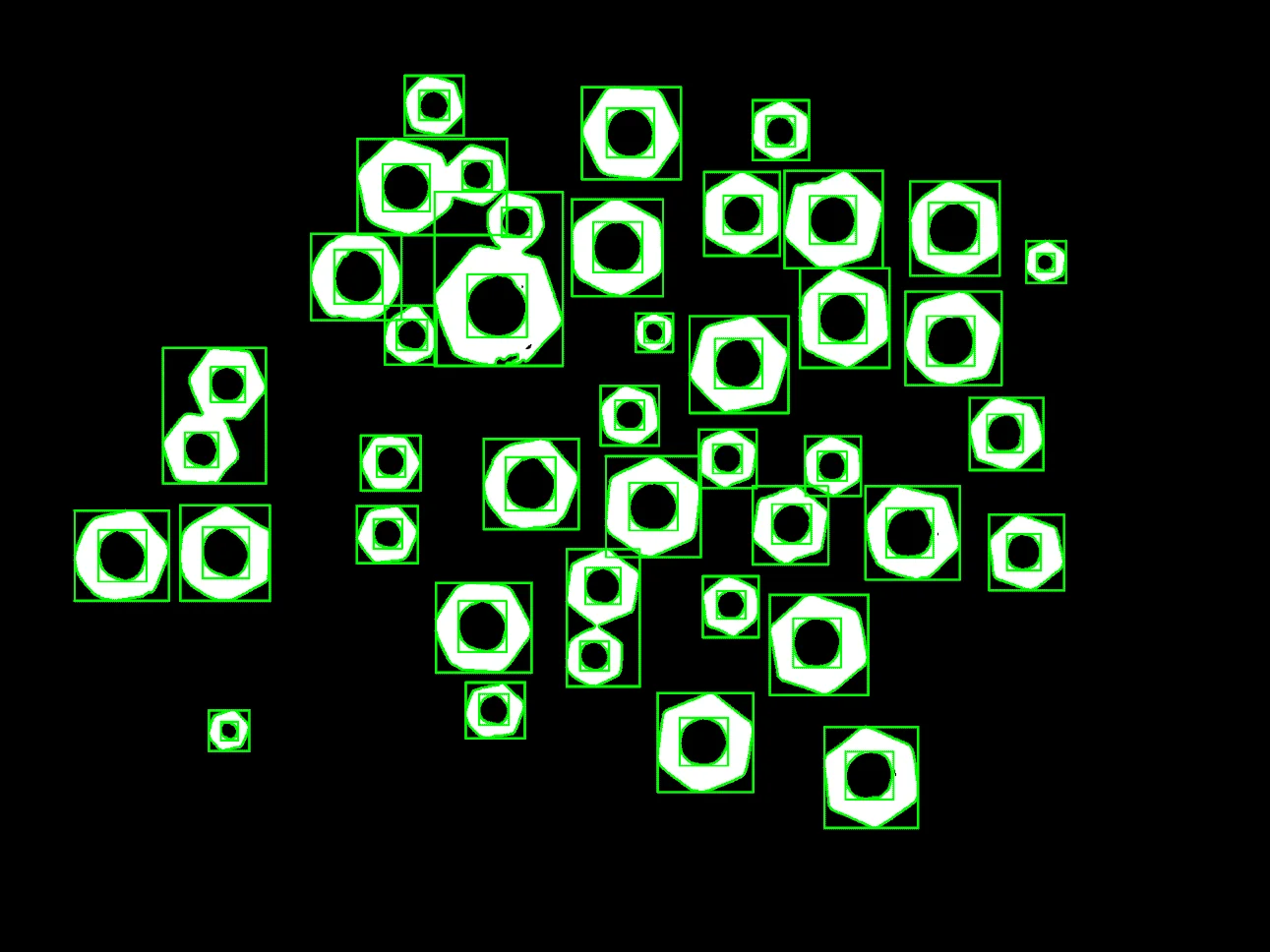
Contours detected around metal parts in a high-contrast imageBasic · 8 min read

What is Contour Detection?

Learn how a binary mask becomes an ordered outline with outer borders, holes, and hierarchy. Then use contour approximation and geometry to measure parts, inspect defects, and connect image pixels to robot coordinates.

Read tutorial →
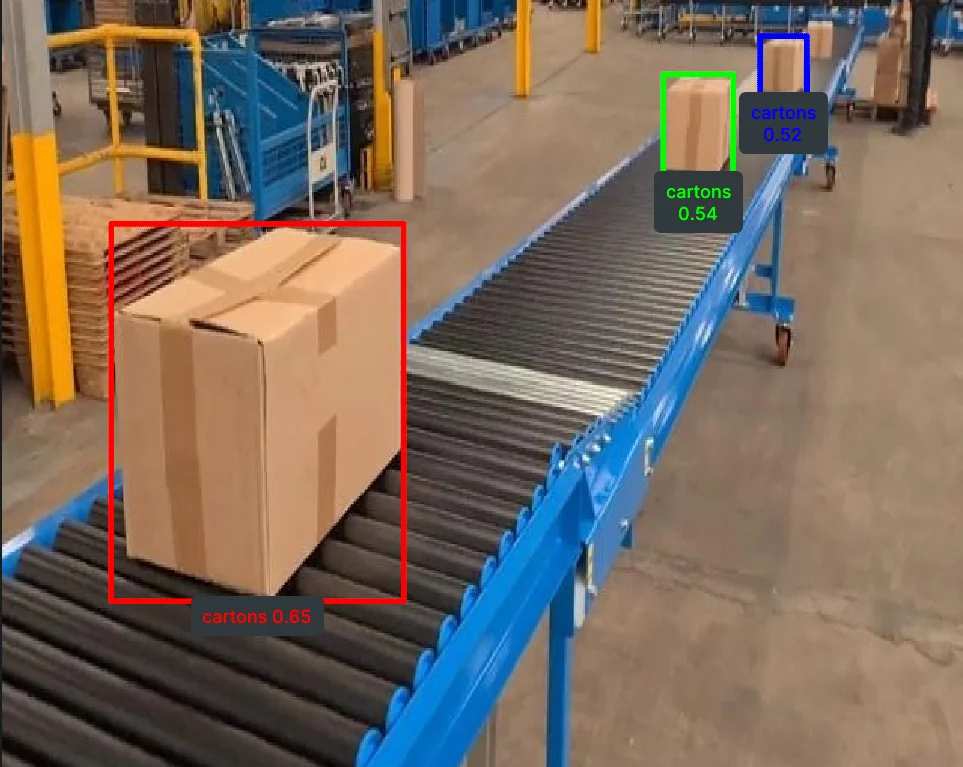
Warehouse objects detected with RF-DETR through RetinaIntermediate · 8 min read

What is RF-DETR?

Follow image features and learned object queries through RF-DETR. See how one-to-one matching produces a prediction set and how architecture search finds useful accuracy–latency choices for real robot hardware.

Read tutorial →
Warehouse objects detected with YOLOX through RetinaIntermediate · 10 min read

What is YOLOX?

Follow a camera image through YOLOX from multi-scale features to final boxes. Learn why it predicts without anchors, separates class and box branches, assigns training examples with SimOTA, and removes duplicates with NMS.

Read tutorial →
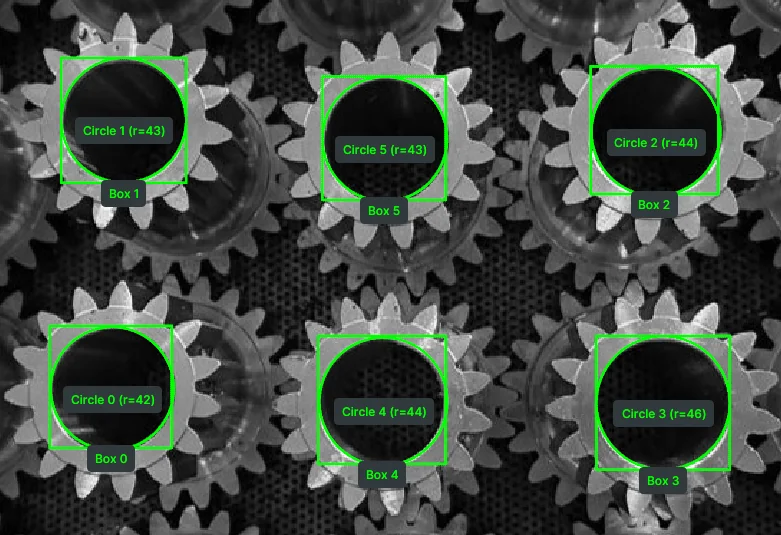
Circular metal gears detected with the classic Hough transformBasic · 7 min read

What is the Classic Hough Transform?

See how Canny edge pixels vote for possible circle centres and radii, why agreement creates peaks in an accumulator, and when this explainable geometric method is better than a learned detector for robot inspection.

Read tutorial →