A cobot may see three cartons on a workbench. They are three physical object instances, but they can all share the same category: carton. Keeping those two ideas separate makes detector outputs much easier to understand.
1. What is a Category?
A category is a semantic label shared by objects that a perception system treats as the same kind of thing. Examples include person, pallet, carton, and drill.
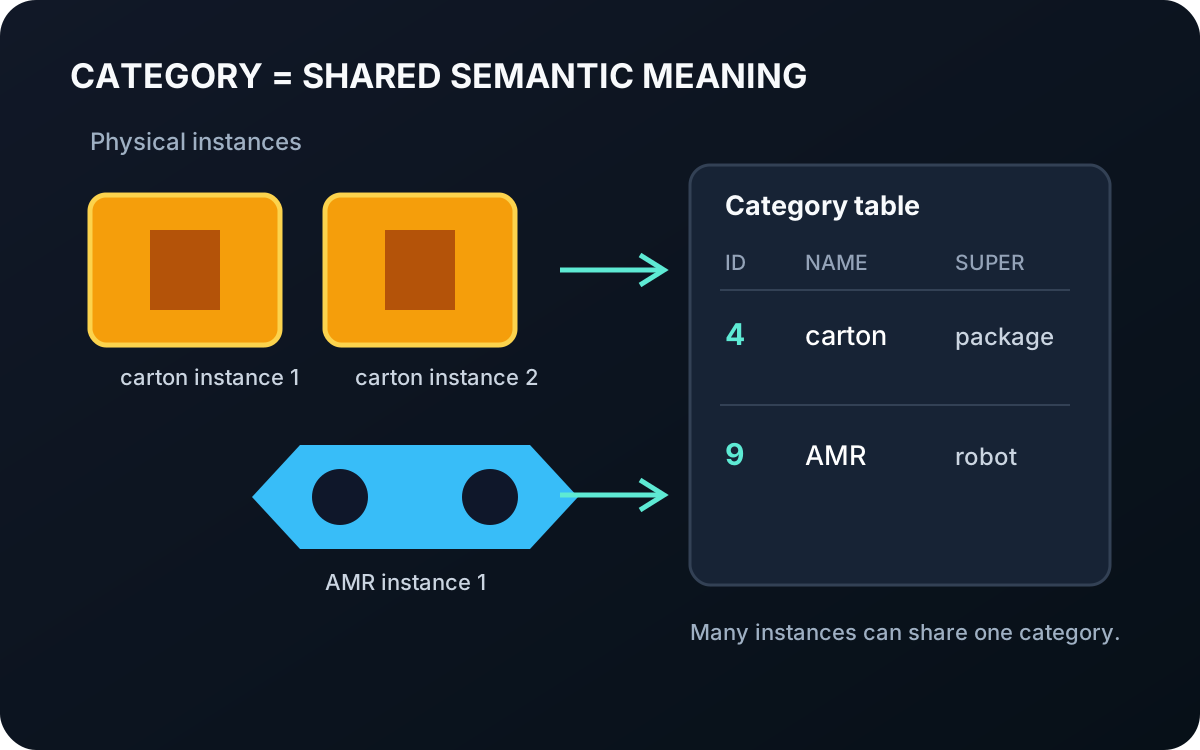
A category is not the object itself. If an image contains five cartons, there is one category definition and five possible detections or instances. It is also not a confidence score: the label says what kind of object is proposed, while the score says how strongly the model supports that proposal.
1.1 Why Models Use Category IDs
Models and datasets commonly store a small integer instead of repeating a text label for every result. A category table resolves that integer:
| ID | Name | Supercategory |
|---|---|---|
| 4 | carton | package |
| 7 | pallet | load carrier |
| 12 | drill | tool |
If a detection returns category_id = 12, the table tells the application that the name is drill. The numeric ID has no universal meaning. ID 12 in another model may refer to a different category, so the result and its category table must travel together.
A supercategory groups related categories at a broader level. drill and screwdriver might both belong to tool. This hierarchy can help a humanoid fall back from a precise instruction to a broader behavior, but the supercategory does not replace the original label.
1.2 Fixed and Prompt-Derived Categories
A conventional detector usually has a fixed category table chosen during training. An open-vocabulary model can build categories from the phrases supplied at inference time. In both cases, downstream code should resolve IDs through the returned table rather than assuming a global numbering scheme.
Categories also depend on task design. One application may use the category fastener; another may distinguish bolt, nut, and washer. A category is therefore an engineering definition, not a statement that nature has only one correct vocabulary.
2. Categories in Telekinesis
Telekinesis represents one COCO-style definition with datatypes.Category. It stores an integer id, a string name, and a string supercategory.
from telekinesis import datatypes

category = datatypes.Category(
    id=12,
    name="drill",
    supercategory="tool",
)

print(category.id, category.name, category.supercategory)
These fields are read-only after construction, which helps keep the ID-to-name mapping stable while results move through a pipeline.
3. Where to Go Next
 Basic · 3 min read
What is a Bounding Box?
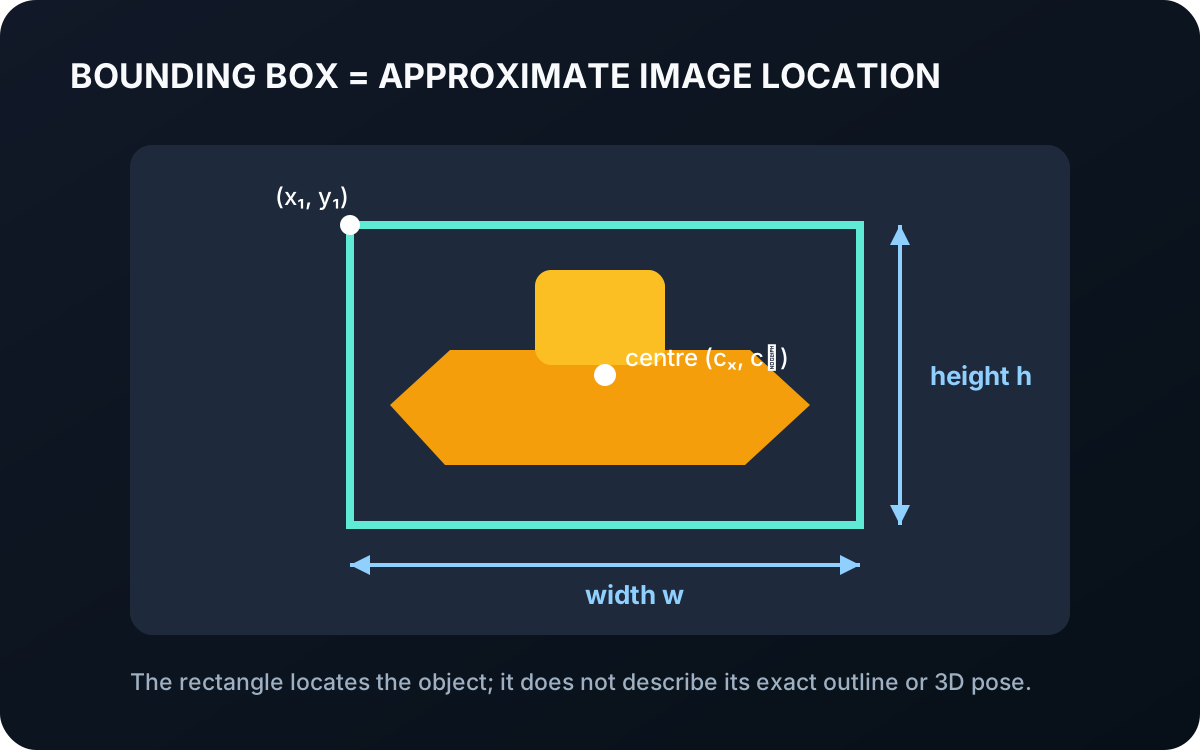
A bounding box is a rectangle that gives an object a compact image location. Learn its common coordinate formats, what information it preserves, and how Telekinesis represents boxes.
Read tutorial →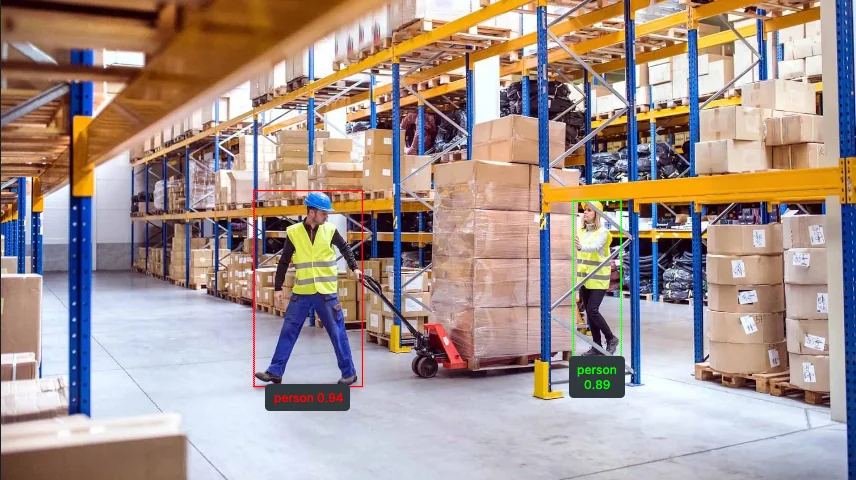 Intermediate · 17 min read
What is RF-DETR?
RF-DETR solves the problem of detecting known objects accurately within a tight latency budget by using a real-time detection transformer. Learn the architecture of RF-DETR, the loss functions it was trained with, and how to use it in the Telekinesis Agentic OS.
Read tutorial →